Rwanda officially launched a new Gender Equality Certification Scheme to promote equality in workplaces across the country last year. The scheme is the first of its kind in Africa and aims to institutionalise gender equality through a national standard and formal certification process, creating concrete benchmarks for how organisations recruit, promote, pay, and protect their workers.
Health Poverty Action is the first non-governmental organisation (NGO) to implement the Gender Equality Standard in Rwanda. We have been supporting five tea factories in the Western Province to work towards certification, using the standard as a practical tool to address the everyday inequalities women face at work.
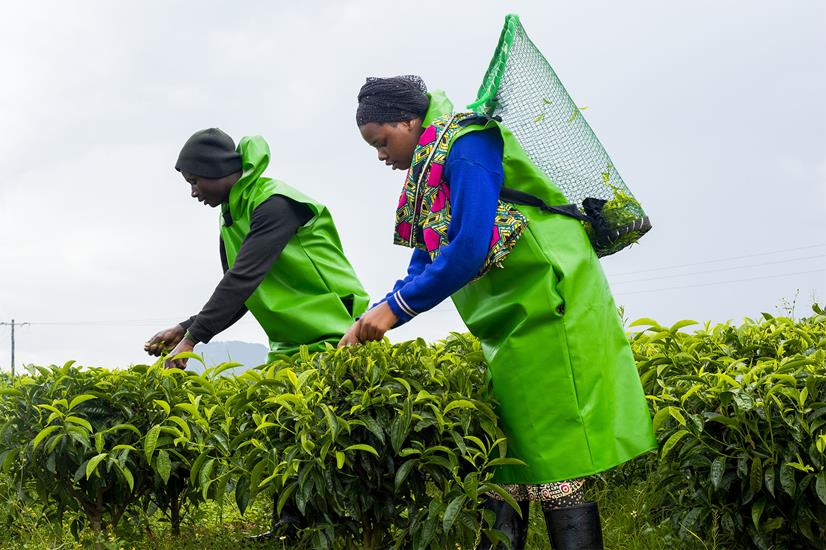
In Rwanda, the tea sector is a major employer, and women make up a large proportion of the employees. Yet, as in many sectors, women are more likely to be employed in lower-paid roles, face barriers to leadership, and experience unsafe or undignified working conditions. Today, gender inequality is embedded in workplace structures, infrastructure, and decision-making power.
Working towards certification began with each factory carrying out a detailed self-assessment against the Gender Equality Standard, followed by the development of a Gender Equality Action Plan.
One of the most immediate issues identified was sanitation. As part of the certification process, the tea estates built 25 gender-segregated toilet blocks with separate facilities for women and men, doors, and clear signage. In practice, this means women no longer need to go off to secluded areas, which reduces the risks of harassment and makes a real difference to dignity and safety at work.
As the Gender Equality Action Plans took shape, another issue kept coming up: childcare. We carried out an early childhood development assessment around the tea estates, which made clear just how hard it is for working mothers to find childcare that is safe, affordable, and close enough to where they live or work. Without it, many women simply cannot work consistently or take on more responsibility. The assessment helped shift this from an individual problem to a shared one, prompting tea factory management to commit to improving childcare provision, including exploring mobile childcare options that could operate near the estates.
Women’s voices and leadership were also a central focus. Each estate set up a Gender Equality Committee made up of staff from different levels of the organisation, with members trained on gender equality standards, recruitment, promotion, and pay equity. These committees sit within the companies themselves, creating an internal mechanism to continue this work beyond the lifespan of any single project and to challenge inequalities as they arise.
The estates also introduced a confidential reporting system for gender-based violence and workplace harassment, making it much safer for women to raise their concerns and access support. For many women, the absence of safe reporting channels is a major reason abuse goes unchallenged.
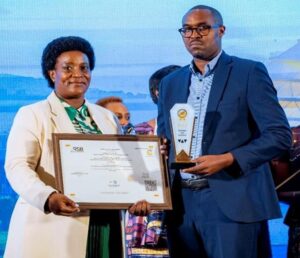
Pictured above: Rwanda Mountain Tea staff receive their gender equality certificate from the Minister of Gender and Family Promotion
In late 2024, 25 organisations across Rwanda were recognised for their work under the Gender Equality Certification Scheme. Sixteen received gold certification, and nine received silver. All five tea factories supported by Health Poverty Action were awarded gold, reflecting the changes they had made across day-to-day working conditions, leadership, and accountability. What this process shows is what becomes possible when inequality is treated as a structural problem and when time and effort are put into building equality into how a workplace actually functions.
Across the tea estates we work with, changes to toilets, childcare, reporting systems, and decision-making structures are already reshaping what work looks like for women.