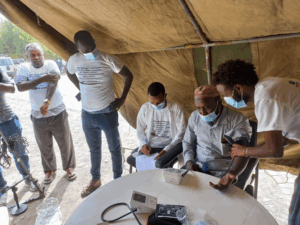
Pictured above: We provide and support healthcare in communities that host refugees
Another issue is the variety of challenges that internal and international migrants can face in their new homes, such as racial, ethnic and religious discrimination, social exclusion and integration, exploitation, economic precarity, uncertain legal status, emotional distress, gender-based violence, culture shock, and lack of support networks.
Nomadic peoples and mobile workers can face particular challenges. They often face exposure to infectious diseases, while their ability to access healthcare and social support can be limited, especially when they are in transit, away from their official place of residence, or in unfamiliar territory. Furthermore, they sometimes experience social exclusion or conflict with settled populations.
Lastly, many communities are greatly affected by issues arising from emigration. These can include covering the cost of migration, family estrangement, loss of so-called ‘human capital’, the impact of remittances from expatriates, reintegration of returnees, and more.
As Teresa Fuentes, HPA’s National Administrator in Guatemala, explains: “Lack of opportunities and unemployment pushes many people, especially men, to migrate to the USA, Canada and Spain…Migration leads to family break-ups: the husband migrates, some forget about their families and abandon them, with many starting new families in the new country.”