In Ethiopia, for example, ongoing civil conflict means people are finding it harder than ever to access healthcare. As our Head of Programmes for Africa, Dr Tadesse Kassaye Woldetsadik, explains: “Especially in rural communities this is a challenge…militia fighters are fighting against the government and often the governments will close roads, even destroying infrastructure such as bridges themselves to ensure the militia can’t follow them. Then people find their access routes to the clinics or health posts are impassable.”
Our work in Somaliland, an autonomous territory that declared independence from Somalia in 1991, is shaped by that region’s experience of conflict. Many of the communities we work alongside have been displaced or isolated as a result of conflicts, leaving people uprooted from their homes, support networks and livelihoods.
We have been collaborating with health workers, government officials, and community leaders for over thirty years to ensure that people living in camps for internally displaced persons, especially women and children, can access healthcare, build livelihoods, protect their rights, and stay safe.
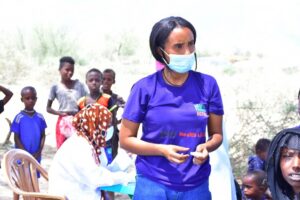
Pictured above: Our team in Ethiopia, including midwives, doctors and other health workers, serves remote settlements that accommodate people taking refuge from regional conflicts